


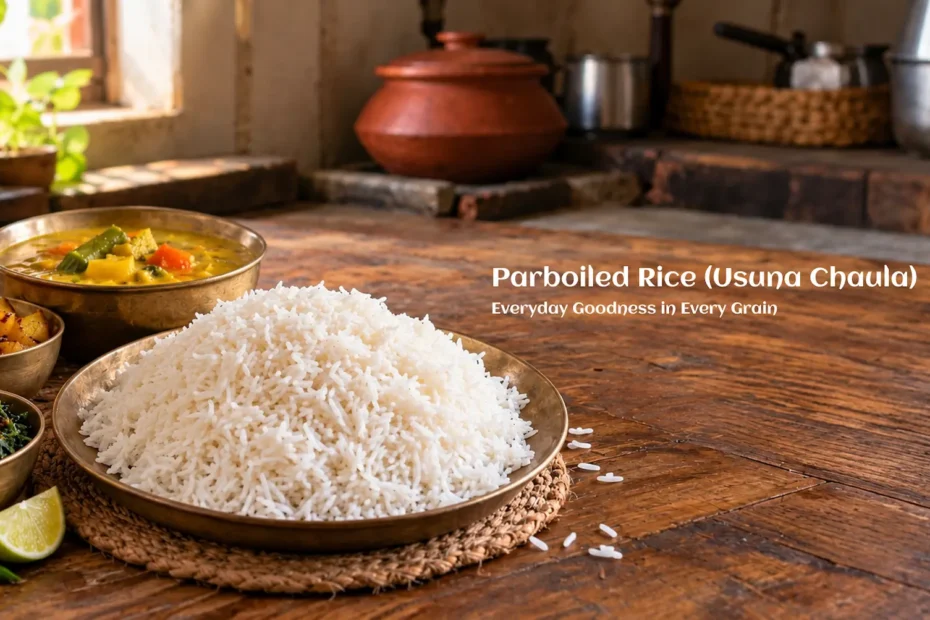
Imagine coming home to the smell of freshly cooked bhata, dalma simmering on the stove and a plate of aloo bhaja waiting on the table. Simple food, familiar flavours and that comforting feeling of being home — for many Odia families, this is what makes a meal special. And when summer arrives, the same love for rice takes a refreshing turn with Pakhala, served with badi chura, saga bhaja or a favourite pickle.
Rice has a special place in Odisha’s food culture, and Usuna Chaula also known as Parboiled Rice is a familiar choice in many kitchens. But have you ever wondered why people choose it for everyday meals, how it differs from Arua Chaula and what to look for when buying rice?
Why Is Usuna Chaula a Favourite in Odia Homes?
In many Odia homes, rice brings the whole meal together. Usuna Chaula is a familiar choice for daily cooking because its grains generally stay firmer after cooking and pair well with dal, vegetables and curry.
Parboiled Rice is prepared by processing paddy before milling. This process changes the texture of the grain and helps reduce breakage during milling. These qualities make it a popular rice choice in several parts of India, including Odisha.
Everyday Benefits of Parboiled Rice
- Firmer Grains After Cooking: Usuna Chaula generally holds its shape well after cooking, making it suitable for meals served with dal, vegetables and curry.
- Retention of Certain Nutrients: Parboiling can help retain some B vitamins compared with ordinary milled raw rice. The exact nutritional content depends on the rice and its processing.
- A Familiar Part of Odia Food Culture: From everyday bhata to Pakhala, rice remains an important part of traditional Odia meals.
Usuna Chaula vs Arua Chaula: What’s the Difference?
Both are familiar in Odia kitchens, but they are processed differently.
- Usuna Chaula (Parboiled Rice): Paddy is parboiled before milling, producing grains that are generally firmer.
- Arua Chaula (Raw Rice): Rice that has not undergone parboiling. It is used in many traditional preparations and everyday dishes.
The right choice depends on your preferred texture and what you are cooking. Certain pitha preparations traditionally call for raw rice, while many families prefer Parboiled Rice for regular meals.
Choosing Rice for Your Family
Different rice varieties can have different grain sizes, textures and cooking times. Before buying, think about the dishes your family prepares most often and the kind of cooked rice everyone enjoys.
Store your rice in a clean, dry, covered container and follow the cooking instructions on the packaging for the best results.
Beyond the Kitchen: The Journey of Rice
Rice has an important place on our plates, but its value extends beyond everyday meals. Rice bran and other rice-derived materials can also be used in different industries.
Balgopal Food Products (BGF) is connected to the rice-processing industry, where rice and its by-products have uses beyond the kitchen.
Frequently Asked Questions
1. What is Usuna Chaula called in English?
Usuna Chaula is commonly called Parboiled Rice in English.
2. Is Usuna Chaula commonly eaten in Odisha?
Yes, it is a familiar choice for everyday meals in many Odia households, although preferences vary between families.
3. What are the benefits of Parboiled Rice?
Parboiled Rice generally has firmer grains, experiences less breakage during milling and retains certain B vitamins better than ordinary milled raw rice.
4. Can Parboiled Rice be used to make Pakhala?
Yes. Pakhala can be prepared with cooked Parboiled Rice or raw rice, depending on personal preference.