


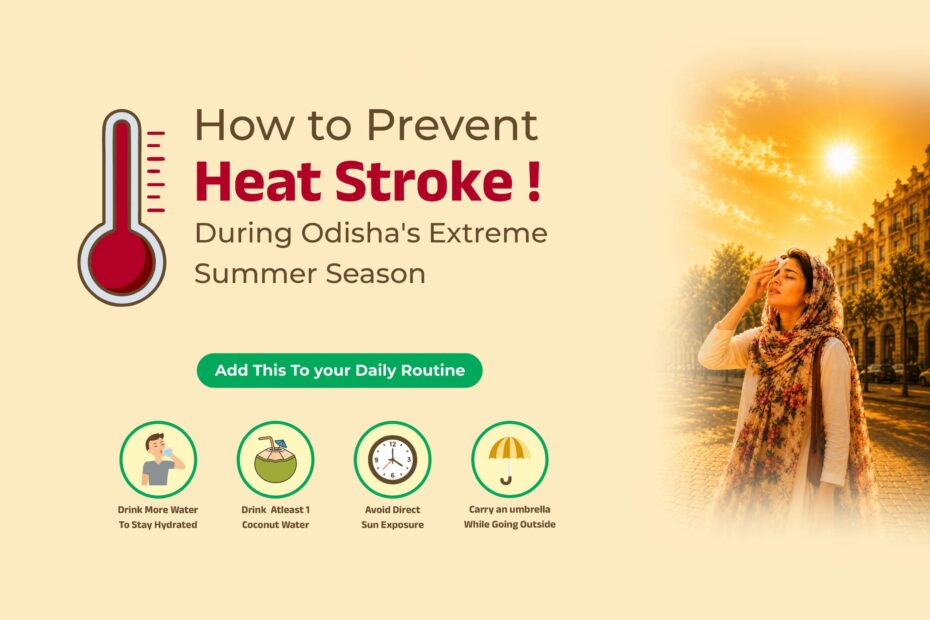
Knowing how to prevent heat stroke during summer is essential for families in Odisha. As temperatures rise across the state, taking the right precautions can help protect you and your loved ones from heat-related illnesses.
As temperatures continue to rise across the state, understanding the risks of heat stroke and adopting simple preventive measures can help individuals and families stay safe throughout the season.
What is Heat Stroke?
Heat stroke is a severe heat-related illness that occurs when the body’s temperature rises rapidly and its natural cooling system becomes unable to function effectively. It is considered a medical emergency and requires immediate attention.
Heat stroke can develop after prolonged exposure to high temperatures, especially when combined with dehydration and direct sunlight.
Common Signs and Symptoms of Heat Stroke
Recognizing the warning signs early can help prevent serious complications.
Some common symptoms include:
- High body temperature
- Excessive sweating or unusually dry skin
- Dizziness and confusion
- Severe headache
- Nausea or vomiting
- Fatigue and weakness
- Rapid heartbeat
- Loss of consciousness in severe cases
If any of these symptoms occur, it is important to move to a cooler environment, hydrate, and seek medical assistance if necessary.
Why Odisha’s Summers Demand Extra Attention
Odisha experiences intense summer temperatures, particularly during the afternoon hours. Combined with humidity and extended outdoor exposure, these conditions can increase the risk of dehydration, heat exhaustion, and heat stroke.
Children, senior citizens, outdoor workers, and individuals with existing health conditions are often more vulnerable to the effects of extreme heat.
This makes awareness and prevention especially important during the peak summer months.
For more food, nutrition, and healthy lifestyle insights, visit the Balgopal Food Blog.
How to Prevent Heat Stroke During Summer in Odisha
Stay Hydrated to Prevent Heat Stroke During Summer
Staying hydrated is one of the most effective ways to prevent heat stroke during summer.
Drink water regularly, even when you do not feel thirsty. During hot weather, the body loses fluids quickly through sweat, making frequent hydration essential.
Apart from water, options such as coconut water, buttermilk, fresh fruit juices, and ORS solutions can help replenish lost fluids and electrolytes.
Avoid Direct Sun Exposure During Peak Hours
Limiting outdoor activities during peak heat hours helps prevent heat stroke during summer and reduces the risk of dehydration.
The sun is typically strongest between 12 PM and 4 PM.
Whenever possible, plan outdoor activities during the morning or evening hours. Limiting direct exposure during peak heat periods can significantly reduce the risk of heat-related illnesses.
Wear Light and Comfortable Clothing
Clothing plays an important role in maintaining body temperature.
Choose:
- Light-colored clothing
- Loose-fitting garments
- Breathable cotton fabrics
These help improve air circulation and keep the body cooler throughout the day.
Include Cooling Foods in Your Daily Diet
Food choices can also help the body cope with rising temperatures.
Summer-friendly foods such as:
- Watermelon
- Cucumber
- Seasonal fruits
- Fresh vegetables
- Buttermilk
can contribute to hydration and overall well-being.
Traditional summer foods enjoyed across Odisha are often preferred during this season because they provide comfort and help the body stay refreshed.
Recognize the Early Signs of Dehydration
Dehydration is one of the leading factors contributing to heat-related illnesses.
Watch for signs such as:
- Excessive thirst
- Dry mouth
- Dizziness
- Fatigue
- Reduced urination
Taking action early can help prevent more serious conditions like heat exhaustion and heat stroke.
Use Protective Accessories Outdoors
Simple protective measures can make a significant difference.
When stepping outside:
- Carry an umbrella
- Wear a cap or hat
- Use sunglasses
- Cover your head whenever possible
These precautions help reduce direct heat exposure and provide additional protection from the sun.
Take Extra Care of Children and Senior Citizens
Young children and elderly family members are more sensitive to extreme temperatures.
Ensure they:
- Drink enough fluids regularly
- Stay indoors during peak heat hours
- Wear comfortable clothing
- Get adequate rest throughout the day
A little extra attention can go a long way in protecting vulnerable family members during the summer season.
Healthy Habits to Prevent Heat Stroke During Summer
Building healthy habits can help families stay comfortable and safe throughout the season.
Some simple practices include:
✔ Drinking water regularly
✔ Eating fresh and seasonal foods
✔ Avoiding unnecessary outdoor activities during peak heat hours
✔ Maintaining proper ventilation indoors
✔ Taking regular breaks from direct sunlight
✔ Monitoring children and elderly family members for signs of heat-related stress
These small habits can make a meaningful difference in maintaining overall health during summer.
You can also explore more wellness and nutrition articles on the Balgopal Food website.
The Importance of Summer Awareness
According to the World Health Organization (WHO), staying hydrated and limiting exposure to extreme heat are important steps in reducing the risk of heat-related illnesses.
Heat stroke is largely preventable when the right precautions are taken. Awareness about hydration, nutrition, clothing choices, and heat exposure can help individuals make better decisions during periods of extreme weather.
By staying informed and encouraging healthy summer practices within families and communities, the risk of heat-related illnesses can be significantly reduced.
Conclusion
Odisha’s summer season can be intense, but with proper awareness and preparation, it is possible to stay safe and healthy.
By following these simple precautions, families can successfully prevent heat stroke during summer and stay healthy throughout Odisha’s hottest months.
Simple steps such as staying hydrated, limiting direct sun exposure, choosing appropriate foods, and paying attention to early warning signs can help prevent heat stroke and other heat-related health issues.
As temperatures continue to rise, making summer safety a daily priority can help protect you and your loved ones throughout the season.